Is a bigger cookware set a better deal?
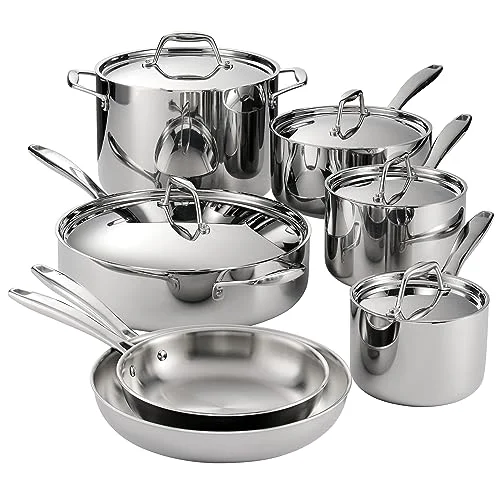
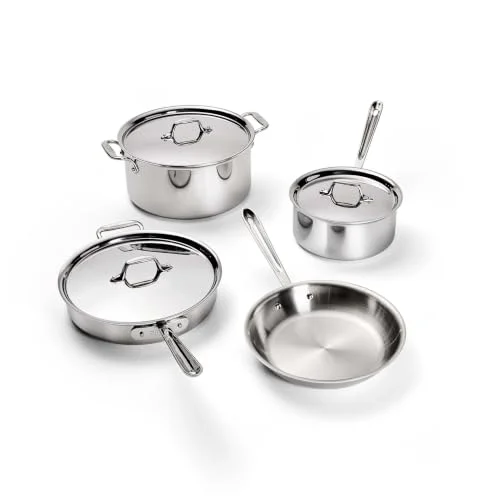
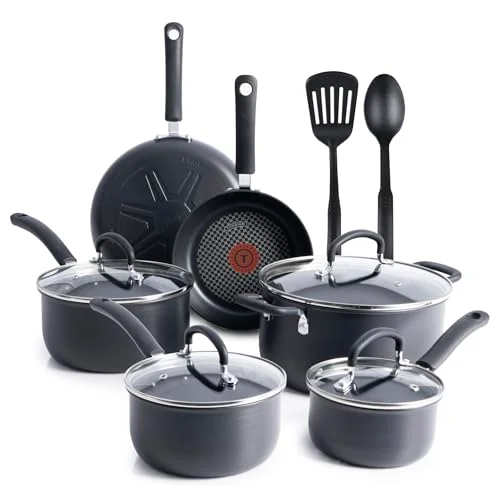
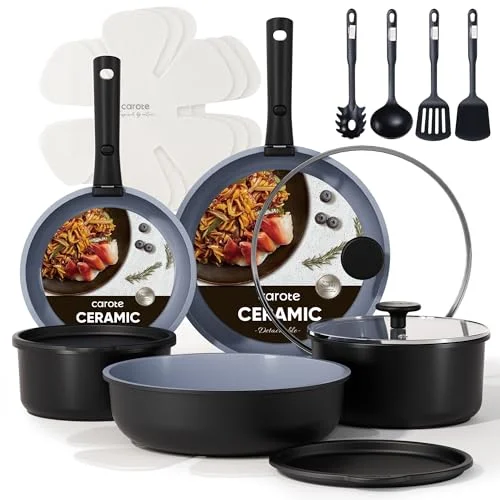
Only if you count the right thing. Makers count every lid as a piece, and many count utensils and pan protectors as well: SENSARTE’s 14-piece ceramic set, for example, is five pans, three lids, two utensils and four pot protectors. Count the pans, divide the price by that number, and then be honest about which of those pans you would actually reach for. A 21-piece box full of near-duplicate saucepans costs cabinet space every day and saves you money only on the pieces you use. Three or four well-chosen pans in the right material will cover most weeknight cooking; you can add a stockpot or a second skillet later.
Should I buy stainless steel or nonstick?
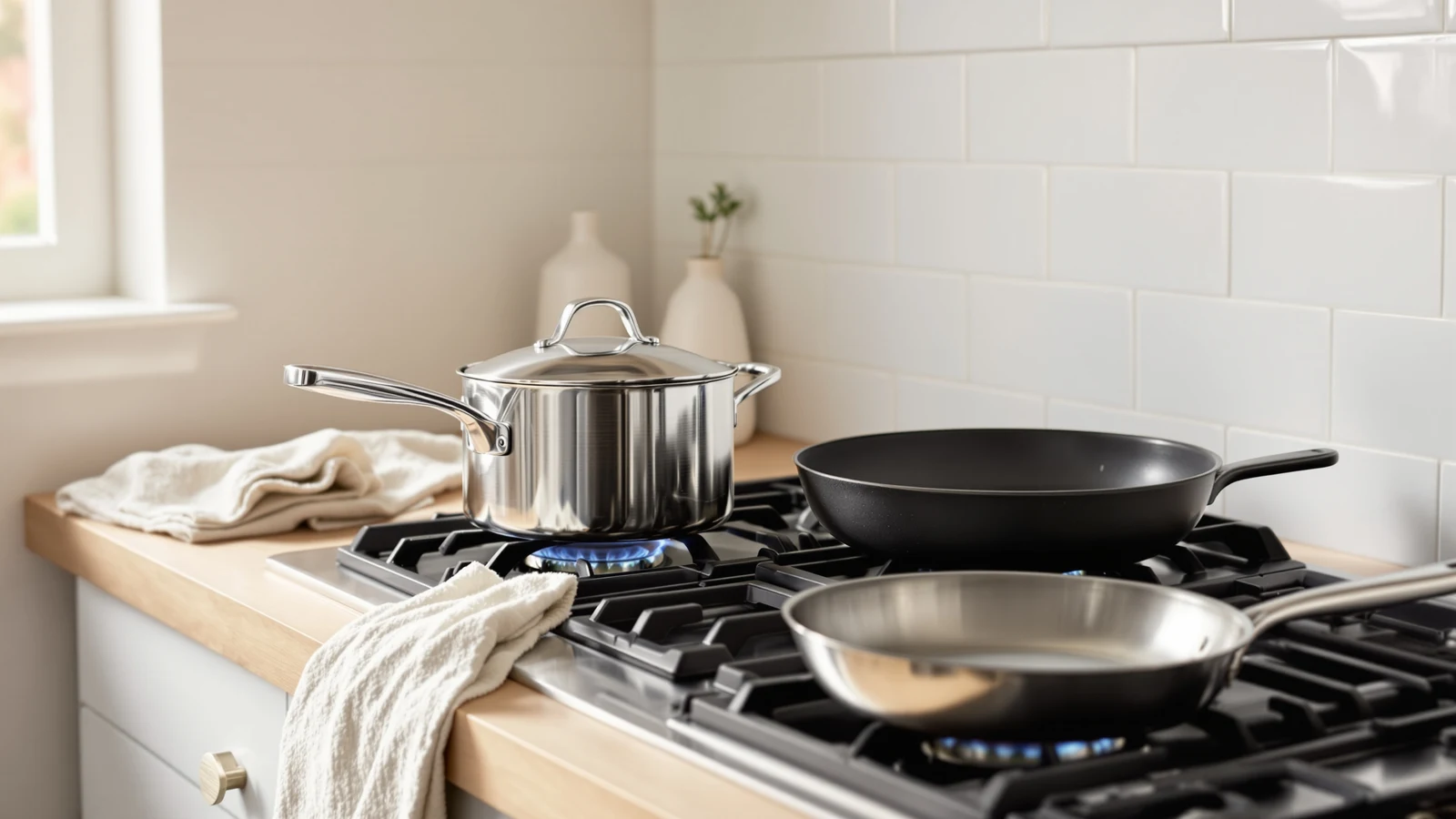
For most kitchens, both — in unequal amounts. A clad stainless set handles searing, sauces, boiling and anything that goes into a hot oven, and it has no coating to wear out, so it is a once-a-decade purchase at most. Add a single inexpensive nonstick skillet for eggs and fish, and replace that skillet when its release fades. An all-nonstick set makes sense if you are learning to cook, cook mostly delicate food at moderate heat, or simply do not want to learn how stainless behaves — but then buy it at a price that accepts the coating is a consumable, which is why our nonstick pick costs $160 rather than $400.
What is the difference between ceramic and PTFE nonstick?
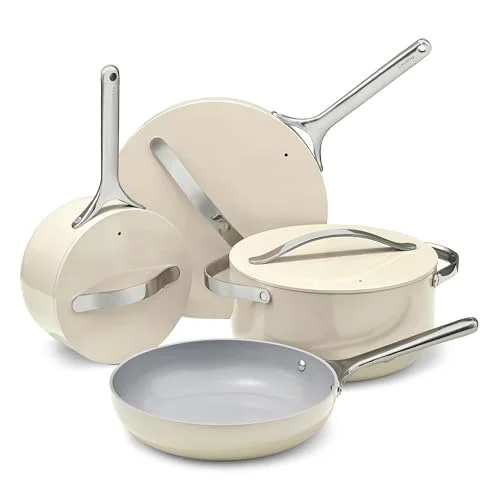
PTFE is the slick fluoropolymer most people call Teflon; ceramic nonstick is a silica-based coating. As materials, PTFE generally keeps its release longer, while ceramic is often rated for higher oven temperatures — Caraway publishes 550°F, GreenPan’s Valencia Pro 600°F. The labels need careful reading. “PFOA-free” on a PTFE pan means a processing chemical was not used; it does not make the pan PFAS-free, because under the broad definitions some regulators use, PTFE itself is a PFAS. Ceramic sets are sold as PFAS-free, and some makers phrase it more precisely as made without intentionally added PFAS. We report what the listings claim; questions about health belong with your doctor, not with a cookware site.
Will my cookware set work on induction?
Hold a kitchen magnet to the base: if it grips firmly, the pan will work on induction; if it slides off or barely holds, it will not. When buying online, read the listing for an explicit claim, because there is no in-between. Clad stainless with a magnetic exterior works. Plain aluminum, including most hard-anodized nonstick, works only if the maker has bonded a steel plate to the bottom — All-Clad does this on its HA1 nonstick line and says so, while T-fal states that its Ultimate hard-anodized sets work on every stovetop except induction. If a listing says nothing at all, assume it does not.
How long should a nonstick set last?
Think in years, not decades — every nonstick coating is a consumable, PTFE and ceramic alike. How many years depends far more on habits than on the brand: high heat, preheating an empty pan, metal utensils on a coating not rated for them, and harsh dishwasher cycles all shorten it. Be wary of durability numbers on the box, too. “3x longer lasting” and “5x more durability” are usually measured against the maker’s own previous or basic coating, not against competitors and not in your kitchen, and the listing usually says so if you read it closely. A stainless set, by contrast, has nothing to wear off.
What do “tri-ply” and “fully clad” actually mean?
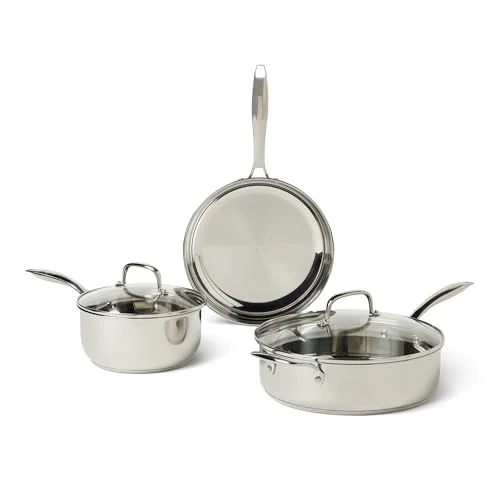
Clad cookware bonds layers of metal — typically stainless steel around an aluminum core — through the whole pan, base and walls. The cheaper alternative puts a disc of aluminum under the bottom only, sold as an encapsulated, impact-bonded or aluminum-core base. That difference matters most in skillets and sauté pans, where heat needs to climb the sides, and least in a stockpot boiling water. Both are legitimate; a disc base is simply cheaper, and our budget pick uses one. Five-ply sets add layers, weight and price; whether that extra layering matters in a home kitchen is not something a specification sheet can settle, so we do not pretend it does.